
Home / Data Centers
COMPUTING + RELIABLE POWER + WATER + LOCAL VALUE
Plan computing infrastructure as part of the place it serves.
A data center brings a defined computing demand together with power, network connectivity, cooling and operations. Regional planning can examine how that demand fits local energy production and other resource needs.
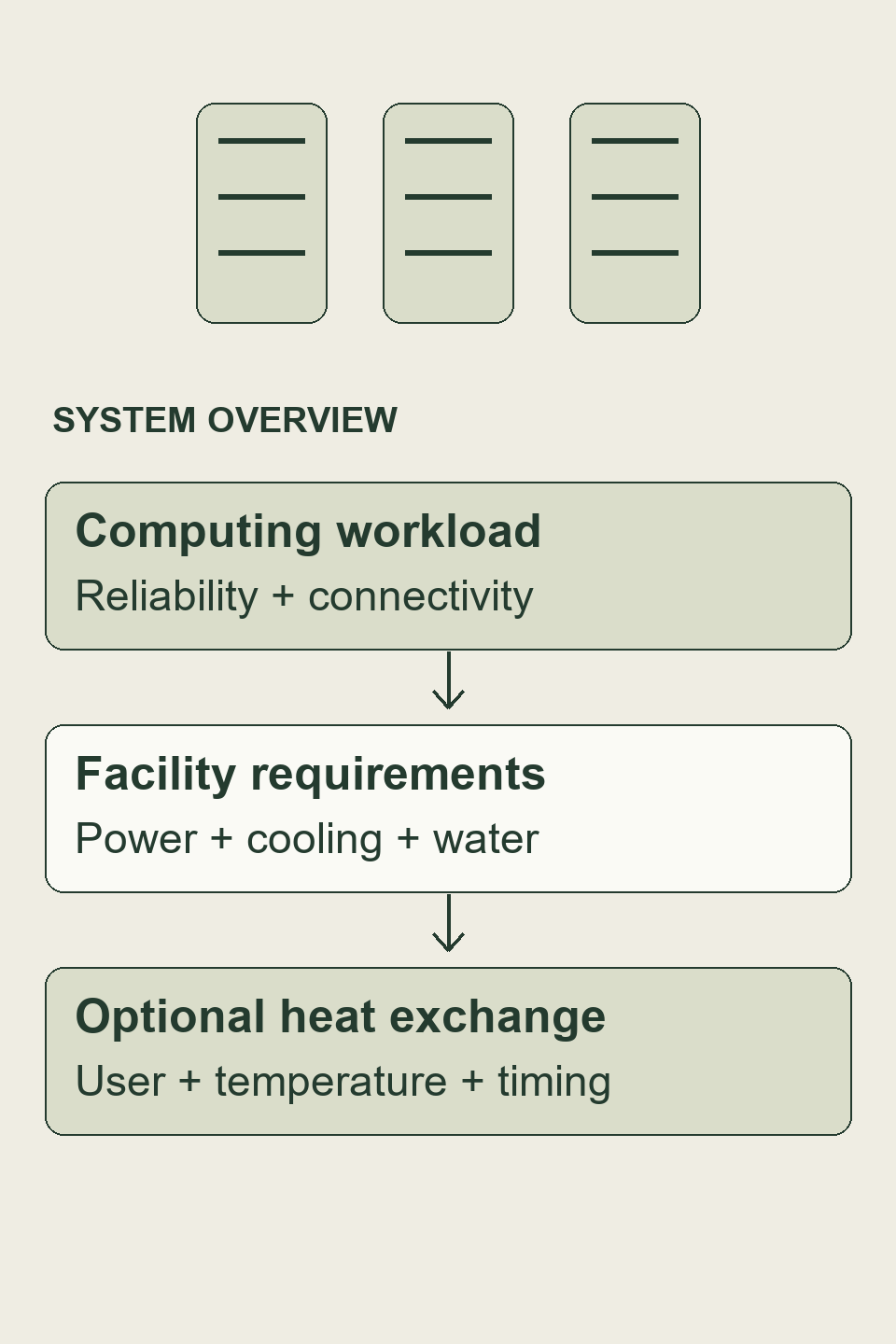
Test each infrastructure need.
Heat reuse needs a real user, suitable temperature, demand and a viable connection.
- Computing workload → Reliability + connectivity
- Facility requirements → Power + cooling + water
- Optional heat exchange → User + temperature + timing
The first decision is a serviceable site.
Establish workload, uptime, power, connectivity and water requirements. Treat heat reuse as an additional case: name the user, required temperature, seasonal demand and cost of transfer or upgrading. Do not count heat value before that case works.
Power the full facility.
Servers are one part of a data center’s electricity demand. Cooling, storage, networking and supporting infrastructure also need power. A credible concept defines the intended workload, availability requirements, grid connection, backup arrangements and growth stages.
Solar and storage can be evaluated against that demand profile. Their presence alone does not establish continuous supply or a commercially workable power arrangement.
Put the water balance near the beginning.
Cooling choice affects power use, water requirements and operating cost. Define the local water source, available supply, make-up demand, recirculation and discharge conditions before selecting a site or cooling system. Water constraints deserve an engineering answer early in the concept.
Evaluate local uses for computing and heat.
A regional computing node could support enterprise workloads, local data services or appropriately scoped automation. Establish the operator, customers, connectivity and service requirements first.
Heat recovery is a separate opportunity to test: identify a nearby user, required temperature, seasonal demand and the cost of moving or upgrading the heat.
Food dehydration is a candidate heat user. A heat exchanger and warm-water loop can supply mesh-belt dryers, provided the temperature and season match.
Size the commercial case in phases.
- Match initial capacity to a defined customer and workload.
- Include cooling, connection, security, staffing and equipment renewal.
- Assess power contracts and reliability alongside capital cost.
- Keep future expansion and prospective resource exchanges visible as assumptions.
Examine the power and heat relationship
A data facility and a farm park may have different power, cooling and heat schedules. Define the facility's demand and backup needs, then compare available heat with a greenhouse or processing use. Temperature, distance, timing and transfer equipment all matter.
Refrigeration and blast freezing add round-the-clock loads to a shared DC microgrid, which affects storage and backup sizing.
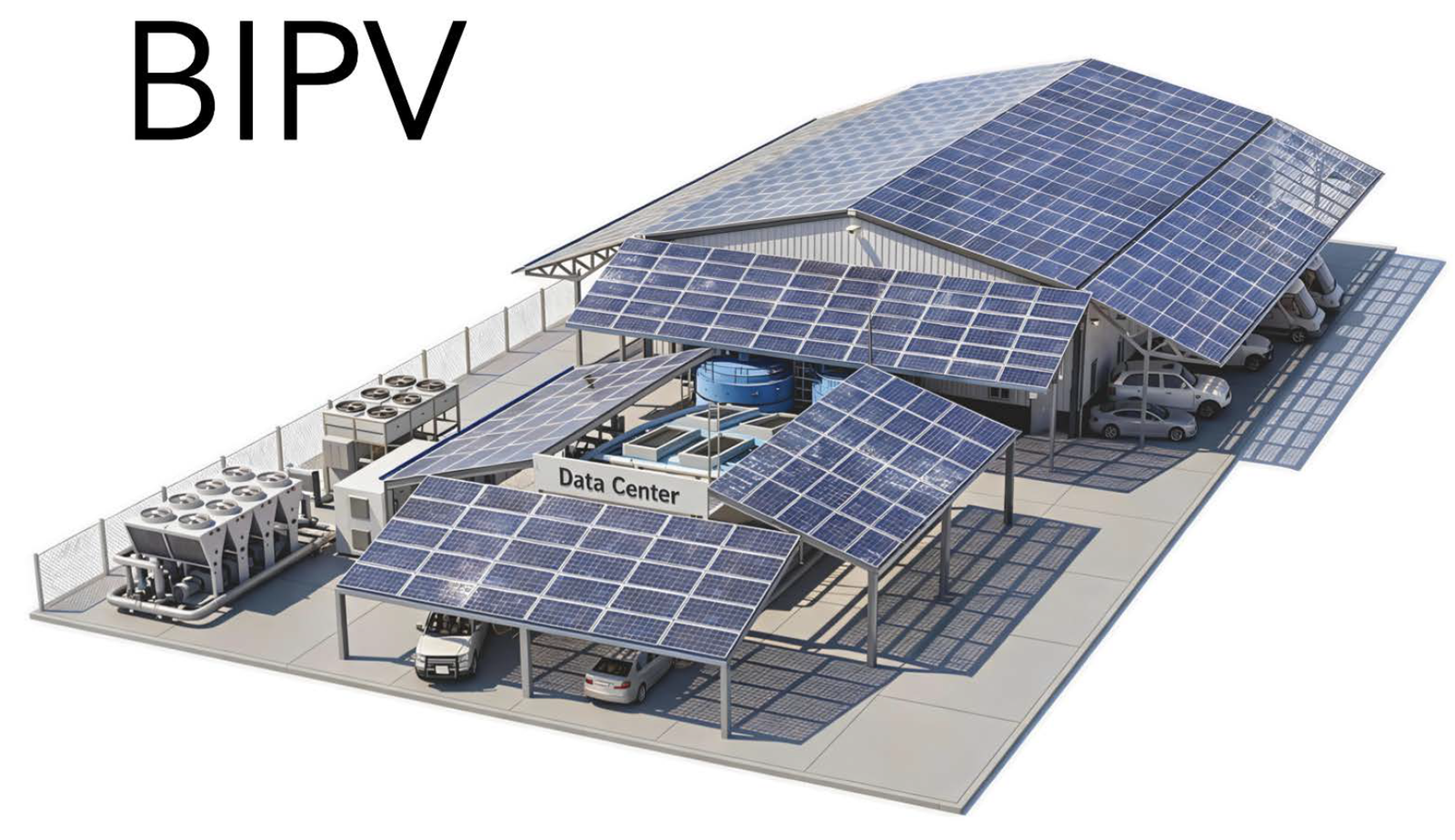
Data-center design with Building Integrated Photovoltaics (BIPV).
Research and next steps
Further reading: International Energy Agency: data center equipment and energy demand. Regional project framing also draws on the October 23, 2026 data-center brief in the project library; it is exploratory.